PREMIUM PRO TURF Envirofill Silica Sand Infill
Synthetic turf without the right infill shifts underfoot, loses fiber orientation, and wears unevenly. Premium Pro Turf's Envirofill line covers two distinct applications — coated 12/20-mesh sand for landscape artificial grass and a 30-50 mesh formulation engineered for golf putting greens — so you're not guessing which product fits your installation. Both ship in 50-pound bags from the same manufacturer that makes the turf itself.

Both Envirofill Infill Products
Envirofill Landscape Sand 50lb
See on Amazon
Envirofill Putting Green Sand 50lb
See on AmazonSee more products
Discover the full product lineup with current selection on Amazon.
All products on AmazonProduct Specifications Side by Side
Both Envirofill products share the same bag weight and manufacturer, but differ in mesh size, color, and target application. The table below captures the specs relevant to selecting the right product for your project.
| Model | Mesh Size | Color | Bag Weight | Best For |
|---|---|---|---|---|
| Envirofill Green Silica Sand (B08FRR762K) | 12/20 coated sand | Green | 50 lbs | Landscape artificial turf, backyard lawn, pet turf, sports field perimeters |
| Envirofill Sand 30-50 Putting Green Infill (B091HXH9N4) | 30-50 mesh | Black / Green | 50 lbs | Synthetic golf putting greens — backyard, indoor, or commercial |
If your installation is landscape turf, the 12/20 product is the correct choice — the coarser granule handles tall pile and high drainage demands. If you're infilling a putting green where ball roll consistency matters, the 30-50 mesh is the only appropriate option from this line.
How to Choose Between the Two Envirofill Formulations
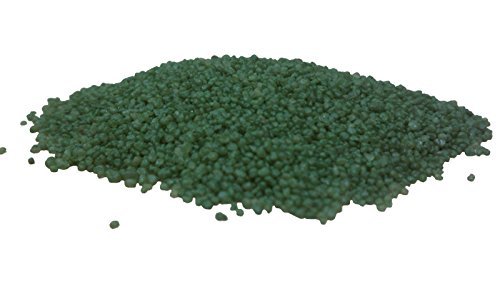
The mesh size printed on the bag is the defining difference between these two products, and it matters more than it sounds. Mesh size describes the coarseness of the sand — a lower mesh number (12/20) means larger granules, while a higher number (30-50) means finer granules. Larger granules work in the taller pile heights of landscape artificial grass because they settle deep into the fiber base, add mass to prevent shifting, and allow water to drain through. Finer granules are correct for putting greens because they distribute evenly across a short, tight pile without bunching, keeping the fiber tips upright and letting the ball roll consistently across the surface.
The practical rule: if your project is landscape artificial grass — backyard lawn, pet turf, sports field fill — the 12/20 Coated Green Silica Sand is the right call. If your project is a synthetic putting green, whether a precut indoor green or a backyard installation, the 30-50 Putting Green Infill is the correct mesh for that pile height and surface performance. Using landscape-grade coarse sand on a putting green will interfere with ball roll and cause uneven fiber support. Using fine putting green sand in a tall-pile landscape application won't provide enough ballast to hold fibers upright under foot traffic.
- Landscape artificial turf (backyard lawn, pet areas, athletic field perimeters): 12/20 coated green silica sand
- Synthetic putting greens (indoor, backyard, or commercial): 30-50 mesh putting green infill
- Mixed-use surfaces that include a putting green section: buy both — don't cross-apply
Real-World Coverage and How Much to Order
Both products ship in 50-pound bags, which makes quantity planning straightforward if you know the square footage of your project. For landscape artificial turf with standard pile heights, infill application rates typically run between 1.5 and 2 pounds of coated silica sand per square foot, depending on pile height and the number of infill passes you apply during installation. A 500 square foot backyard lawn installation would require approximately 750 to 1,000 pounds — 15 to 20 bags — at those rates. Measure your area before ordering, account for a 10 percent overage buffer, and order everything at once so your infill comes from the same production batch.
For putting green infill, the rate is lower because the pile is shorter and requires less sand mass to support the fibers. A typical backyard putting green in the 100 to 200 square foot range will use considerably fewer bags than a landscape installation of the same square footage. The 30-50 mesh product is applied in passes with a drop spreader or by hand-broadcasting in sections, then brushed in with a stiff broom or power broom to work the sand down to the backing level. The goal is full fiber support at the base — not surface coverage. If you can see sand sitting visibly on top of the fiber tips after installation, you've over-applied or not brushed it in fully.
- Landscape turf (12/20): estimate 1.5–2 lbs per sq ft; round up and order in full-bag increments
- Putting green (30-50): lower application rate due to shorter pile — measure your green's square footage and apply in multiple passes rather than dumping all bags at once
- Both products are sold by the bag; plan your order for the full project upfront to avoid variation between batches
- A drop spreader or stiff-bristle power broom speeds even distribution on both surface types
Long-Term Performance and Infill Maintenance
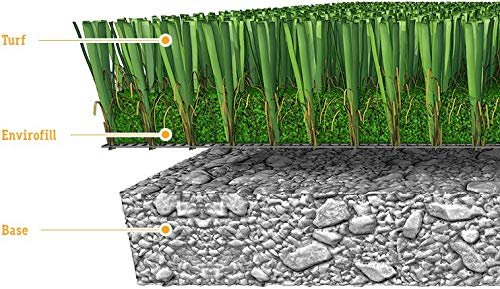
One of the core reasons coated silica sand is the preferred infill choice — over crumb rubber, organic infill, or uncoated sand — is that it doesn't compact, break down, or support bacterial growth over years of use. Uncoated sand can eventually harden into a dense layer at the turf base, reducing drainage and making the surface feel stiff underfoot. Organic infill (cork, wood fiber) composts over time and requires replacement. Coated silica stays stable in place through temperature swings, heavy rain, and routine foot traffic without losing its basic structure. That stability is what makes it appropriate for installations where re-opening the turf to replace infill isn't a practical option.
That said, coated silica infill does migrate over time under heavy directional use. On a backyard putting green with a consistent practice path, or on a high-traffic pet area where a dog runs the same route daily, sand will gradually concentrate on the low end of traffic patterns and thin out elsewhere. Periodic redistribution — dragging a broom across the surface in the low-traffic direction — keeps coverage even. On outdoor installations, heavy rain events can flush fine sand toward drainage points; check fiber support in those areas after significant storms and top-dress with additional infill if the fibers have lost upright orientation. This is a maintenance task measured in minutes once or twice a year, not a structural problem.
- No compaction or decomposition over time — coated silica remains stable without replacement under normal conditions
- Infill does migrate under directional traffic; re-distribute annually with a stiff broom or drag brush
- Check drainage exit points after heavy rain events and top-dress if fiber support has thinned
- Do not mix mesh sizes during a single installation — inconsistent granule size creates uneven fiber support and drainage variation
- Store unopened bags in a dry location; moisture doesn't damage the sand itself but makes bags difficult to handle and broadcast evenly
Frequently Asked Questions
Can I use the 12/20 landscape sand on a putting green?
No. The 12/20 coated sand has granules that are too large for the short, tight pile of a putting green. Coarse granules at that pile height won't distribute evenly at the base — they'll create inconsistent fiber support and interfere with ball roll. The 30-50 mesh putting green infill is the correct product for that application. It's not an interchangeable product decision.
How many bags do I need for my backyard artificial grass installation?
Calculate your square footage, then apply an estimate of 1.5 to 2 pounds of infill per square foot depending on pile height. A 400 square foot lawn at 2 pounds per square foot needs approximately 800 pounds — 16 bags of the 50-pound 12/20 Envirofill. Add a 10 percent buffer and order everything in one purchase so you're working from the same product batch throughout the installation.
Does coated silica infill need to be replaced after a few years?
Under normal conditions, no. Coated silica sand doesn't compact into a hard layer, doesn't decompose, and doesn't support bacterial growth the way organic infills do. What does happen over time is gradual migration under directional traffic — the sand shifts toward low-pressure zones. Annual redistribution with a stiff broom keeps fiber support even. That's a maintenance task, not a replacement cycle.
What tools do I need to apply Envirofill infill properly?
For landscape turf installations, a drop spreader handles even distribution across large areas efficiently. A power broom or stiff-bristle push broom works the sand down to the backing level after each pass. For putting greens, hand-broadcasting in small sections followed by brushing is accurate enough given the lower application rate and the precision needed on that surface type. Apply in multiple passes rather than dumping all bags in one go — it gives you better control over coverage uniformity.
Will heavy rain wash the silica sand infill out of my turf?
Coated silica drains with water through the turf perforations — it won't wash out wholesale in a typical rainstorm. However, repeated heavy rain events can gradually thin infill at drainage exit points, particularly at the edges of an installation. Check fiber orientation in those areas after significant storms. If fibers have lost upright support, top-dress with a small amount of additional infill and brush it in. This is a minor maintenance step, not a structural failure of the product.